

🌵 Care Guide
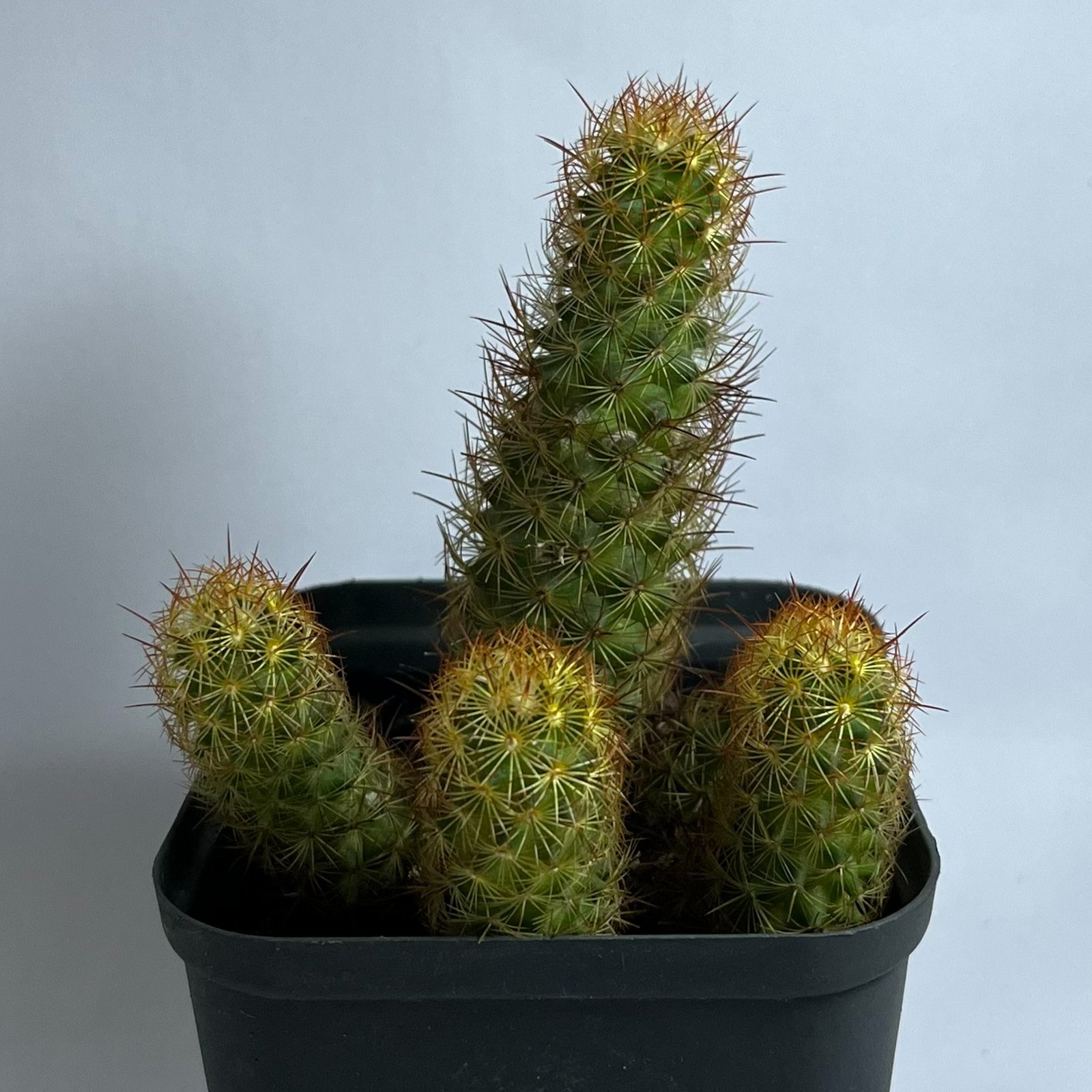
Mammillaria elongata, commonly known as the Ladyfinger Cactus, is a popular and attractive cactus admired for its slender, elongated stems covered with dense golden to yellowish spines. It grows readily in clusters and can form beautiful mounds over time. This is an easy-to-grow cactus and an excellent choice for both beginners and collectors.
☀️ Light
- Prefers bright light to full sun.
- Morning sunlight is excellent for healthy, compact growth and good spine coloration.
- During extremely hot summer afternoons, provide some filtered light or light shade to prevent scorching.
- Indoors, place it near a bright south- or east-facing window.
- Gradually acclimate the plant when moving it from lower light to strong direct sunlight.
💧 Watering
- Spring & Summer: Water thoroughly only when the soil is completely dry.
- Allow excess water to drain completely before watering again.
- Autumn & Winter: Reduce watering significantly and keep the plant relatively dry.
- ⚠️ Avoid frequent watering and standing water, as excess moisture can cause root rot.
- The plant is drought-tolerant and is much more tolerant of dry soil than constantly wet soil.
🌡️ Temperature
- Prefers warm temperatures during active growth.
- Can tolerate cooler conditions when kept completely dry.
- Protect from frost and prolonged cold, wet conditions.
- A cool and dry winter rest can help maintain healthy growth and encourage flowering.
🌱 Soil
- Requires a porous, fast-draining cactus mix.
- Add pumice, perlite, coarse sand, or other gritty material to improve drainage and aeration.
- A mineral-rich mixture is ideal for healthy root development.
- Avoid heavy soils that remain wet for long periods.
🍽️ Fertilizer
- Feed once a month during spring and summer with a diluted, low-nitrogen cactus fertilizer.
- Fertilize only while the plant is actively growing.
- Avoid excessive fertilizer, as it can lead to weak or overly soft growth.
- Do not fertilize during the winter resting period.
🪴 Potting
- Use a pot with excellent drainage holes.
- Choose a container that provides enough room for its clustering root system without being excessively large.
- Repot approximately every 2–3 years or when the plant outgrows its container.
- Handle carefully during repotting because the dense spines can be sharp.
- Allow disturbed roots to dry before watering after repotting.
🌸 Flowering
- Mature plants can produce attractive small white to pale yellow flowers.
- Flowers generally appear in a ring around the upper portion of the stems.
- Good light, healthy growth, and a cool, dry winter rest can help encourage flowering.
- Flowering is seasonal and may vary depending on plant maturity and growing conditions.
🌵 Growth & Appearance
- Produces numerous slender, cylindrical stems that grow upright or slightly spreading.
- The stems are densely covered with attractive golden or yellowish spines.
- With age, the plant can produce many offsets and form a large, attractive cluster.
- Its compact clustering habit makes it excellent for container cultivation.
- The distinctive finger-like stems are the reason for its common name, Ladyfinger Cactus.
🎥 Need Help?
Watch detailed care guides, watering tips, repotting tutorials, and seasonal cactus care on our
YouTube channel – Cactus in Jalandhar
Watch detailed care guides, watering tips, repotting tutorials, and seasonal cactus care on our
YouTube channel – Cactus in Jalandhar


